Overview
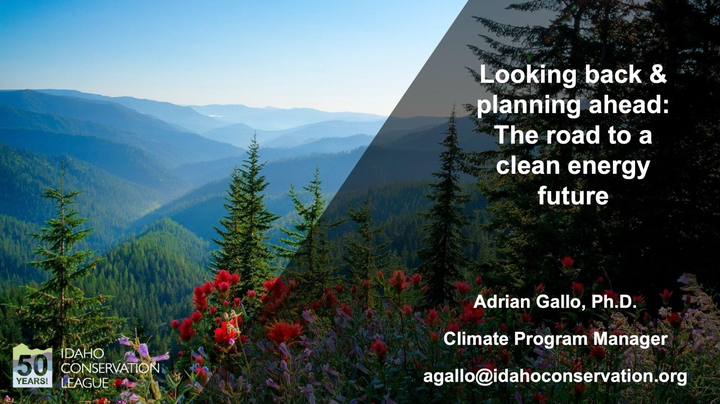
This is a presentation I created for the general public that tries to tell a story about the last 50 years of environmental policy successes and shows how we can do similarly great things with energy policy. I also make the argument that what we currently describe as energy policy, is inherently pro-environment. I connect the passage of the Clean Air/Water, Endangered Species Acts and the creation of the EPA to improvements in our present world. I then make the case that we’re at a similar inflection point with the recent passage of the Inflation Reduction Act, but much works remains to be done to address our polluting ways.
I gave a version of this presentation about five times prior in smaller and larger venues around the State of Idaho. The questions I received were very similar throughout the region and they are identical to ones I hear when I’m back home in California with my family around the holiday dinner tables. The consistency to which I hear the same exact misinformation is a startling indication that the public is genuinely curious and concerned about climate change, but good information is not reaching them. Why is this happening? There’s a myriad of reasons, but as a first approximation I recommend Jane Mayer’s 2016 book Dark Money: The hidden history of the billionaires behind the rise of the radical right, or her 2010 New Yorker article that spurred the motivation for her book.
I have been asked a couple times to consider making this into a TED talk (to which I blush), but until then feel free to share this with your friends & family so they’re aware of the many positive visions in our near future, if we choose to act quickly.
See the presentation PDF and the recorded audio.
Summer 2026 Update
Although the second Trump administration’s tax bill essentially wiped away the entire Inflation Reduction Act (among many other things), the fundamental reality remains true: the energy transition is happening and will continue to happen because it makes economic sense (yes, even without any subsidies). The pace of decarbonization will not be as fast, but wind, solar, and batteries remain the cheapest and least risky ways to produce electrons.

Adrian C. Gallo
Ph.D.
Ecosystem Ecologist
Clean Energy Consultant
I am formally trained as a terrestrial biogeochemist (aka I know a lot about dirt & ecosystem ecology), but I’m now focused on energy policy and strategic communications. You can usually find me outside running, mountain biking, or playing soccer.